

Strip away the neon graphics, the croupier's small talk, and the relentless pop-up bonuses, and what's left in iGaming is the same thing that's always been there: math. Every spin, every river card, every in-play corner bet resolves against a number the house baked in before you even opened the app. Understand that number, and the whole ecosystem stops feeling like luck and starts feeling like a market with a tax rate. Ignore it, and you'll keep wondering why your balance behaves the way it does.
RTP Is a Long-Run Average, Not a Promise
The most quoted figure in casino gaming is Return to Player, or RTP. A slot listing "96.5% RTP" does not mean you get 96.5 cents back on every dollar. It means that across millions of simulated spins, the machine is engineered to return about 96.5% of all wagers, keeping roughly 3.5% as house edge. That gap is where the operator lives.
The trap is sample size. Slots are high-variance by design. In 100 spins a 96.5% game can pay out 40% of your stake or 300% of it, and neither result contradicts the listed RTP. Variance—not RTP—is what actually determines how your session feels.
- Low volatility: frequent, smaller wins. Popular with grinders chasing long play sessions.
- Medium volatility: the middle ground most providers target for broad appeal.
- High volatility: long dead spells punctuated by large potential hits. The 10,000x max-win slots live here.
If a developer says a slot has a 25,000x max win and 96.2% RTP, both can be true at once. The big number sells the dream; the small number keeps the lights on.
Where the House Edge Actually Hides
Different products hide their edge in different places, which is why comparing them matters.
Table Games
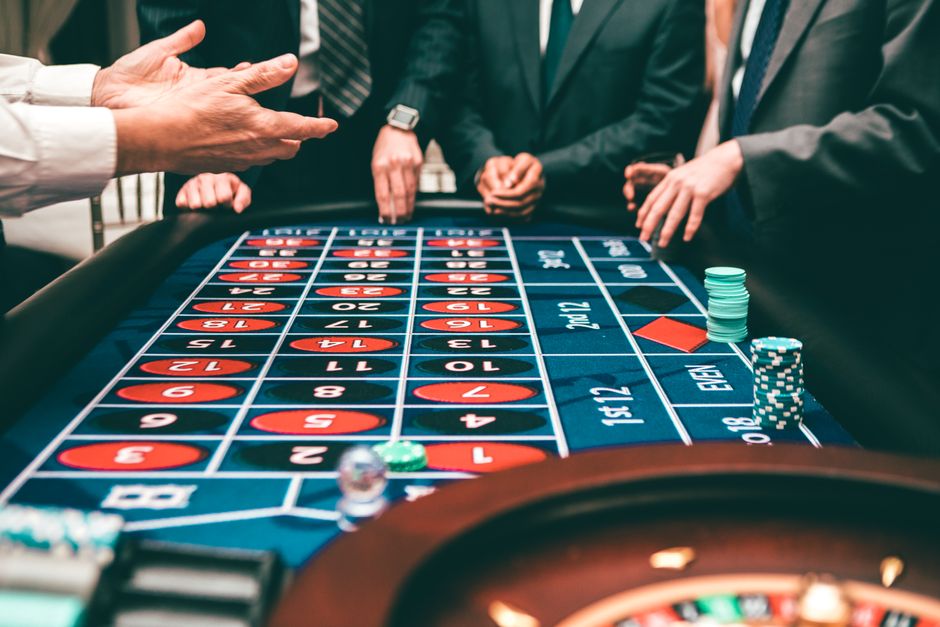
Blackjack played with basic strategy sits around a 0.5% house edge, making it one of the cheapest bets in the building. Roulette swings wildly depending on wheel type. European roulette with a single zero carries roughly 2.7% house edge; American double-zero roulette jumps to about 5.26%. Same game, nearly double the cost of playing. For a closer look, FAFA828 covers this in more detail.
Poker
Poker is the one product where you're not playing the house. You're paying the house—through rake or tournament fees. In cash games the typical rake might be 5% capped at a few dollars per pot; in tournaments the fee is often around 10% of the buy-in, meaning a $10 + $1 tournament has an effective 9% cost before skill enters the equation. The casino takes a guaranteed cut regardless of who wins the pot.
Sports Betting
Bookmakers embed their edge in the odds. A true 50/50 event should be priced around +100 on both sides. When you see -110 and -110 on a two-way market, the implied probability totals roughly 104.8%, and that extra ~4.8% is the theoretical hold. Sharp books run tighter holds; recreational-focused books run fatter ones, especially on parlays and prop bets.
Why Bonuses Are Priced, Not Gifted
That generous welcome package with a 30x wagering requirement? It isn't charity. It's a financial product with terms that determine its real value.
Take a $100 bonus with 30x wagering on slots. You must stake $3,000 before converting anything to withdrawable cash. At a theoretical 96% RTP, the expected loss across those wagers is about $120—more than the bonus itself. Now imagine the same bonus with the wagering restricted to table games or live dealer, where RTP can sit near 97–99% but only 10–20% of bets count toward the requirement. Suddenly the effective cost balloons.
- Always check: the game weighting table, the expiry window, and whether bonus wagers count toward cashback.
- Watch for: "sticky" bonuses that vanish on withdrawal, and max-bet clauses that void wins if you exceed, say, $5 per spin.
- Calculate: bonus × wagering × house edge. If that number exceeds the bonus, you're paying for the privilege of playing.
Bankroll Management Is the Only Variable You Control
Probability doesn't care about your feelings, but it does respond to your behaviour. Luck governs individual hands; discipline governs the horizon.
A workable framework—not a guarantee, just a structure:
- Decide a total session (or monthly) bankroll you can lose without affecting rent or savings.
- Cap any single bet at 1–2% of that bankroll. Betting 10% per hand is how an average losing streak becomes catastrophic.
- Set a stop-loss (e.g., lose 30% and walk) and a stop-win, so a great run doesn't get donated back.
- Track everything. A simple spreadsheet of deposits, withdrawals, and session results reveals more than any gut feeling.
The math works the same for a poker tournament grinder and a casual slot player. Accept the variance, size your bets so no single result is fatal, and the long run stops being a threat.
The Reality Check: Randomness Feels Wrong
Humans are pattern-seeking creatures dropped into a genuinely random environment. That mismatch explains almost every bad decision at a casino.
You'll see it in the classic gambler's fallacy: five reds in a row on roulette and it "must" be black next. It doesn't. Each spin of a well-built wheel is independent, and the odds reset every time. A slot that hasn't paid in 900 straight spins is no more likely to pay on spin 901, unless the game is a deliberately designed streak-based model, which reputable ones aren't.
It also cuts the other way. "I'm due" and "I'm hot" are the same error wearing different clothes. Both assume the past changes the future when, in independent-games iGaming, it simply doesn't.
The useful mindset is to treat each session as entertainment purchased at a known price, not as an investment with a recovery plan. If you're tilting—chasing losses, betting bigger to feel even, hiding sessions—stop and log off. Self-exclusion tools, deposit limits, and reality checks exist on every licensed platform for a reason, and using them isn't weakness; it's just sound risk management.
Practical Tips Worth Repeating
- Compare RTP and rules before depositing. A 96.5% slot and an 88% slot look identical and behave very differently over thousands of spins.
- Read freespin and cashback terms. The headline percentage is marketing; the rules are the product.
- Prefer European roulette over American, and single-deck or early-surrender blackjack when available—publicity-verified variants beat flashy gimmicks.
- In poker, consider moving up in stakes only when you can beat the current level consistently over a large sample, not after one tournament win.
- For sports, line-shop across multiple books. A half-point or a few cents on odds compounds dramatically over a season.
Conclusion
iGaming gets sold as thrills and big wins, but it rewards a colder perspective. Every product—slots, poker, roulette, a Premier League over/under parlay—is a price on uncertainty, and the house makes its profit from the small, persistent gap between true odds and offered odds. You can't remove that gap, but you can measure it, avoid the worst versions of it, and deny it the one thing it needs to do real damage: an oversized, undisciplined bet. Play the odds with your eyes open, run your bankroll like a business rather than a lottery ticket, and the entertainment stays affordable, which was always the point of it in the first place.


Comments